
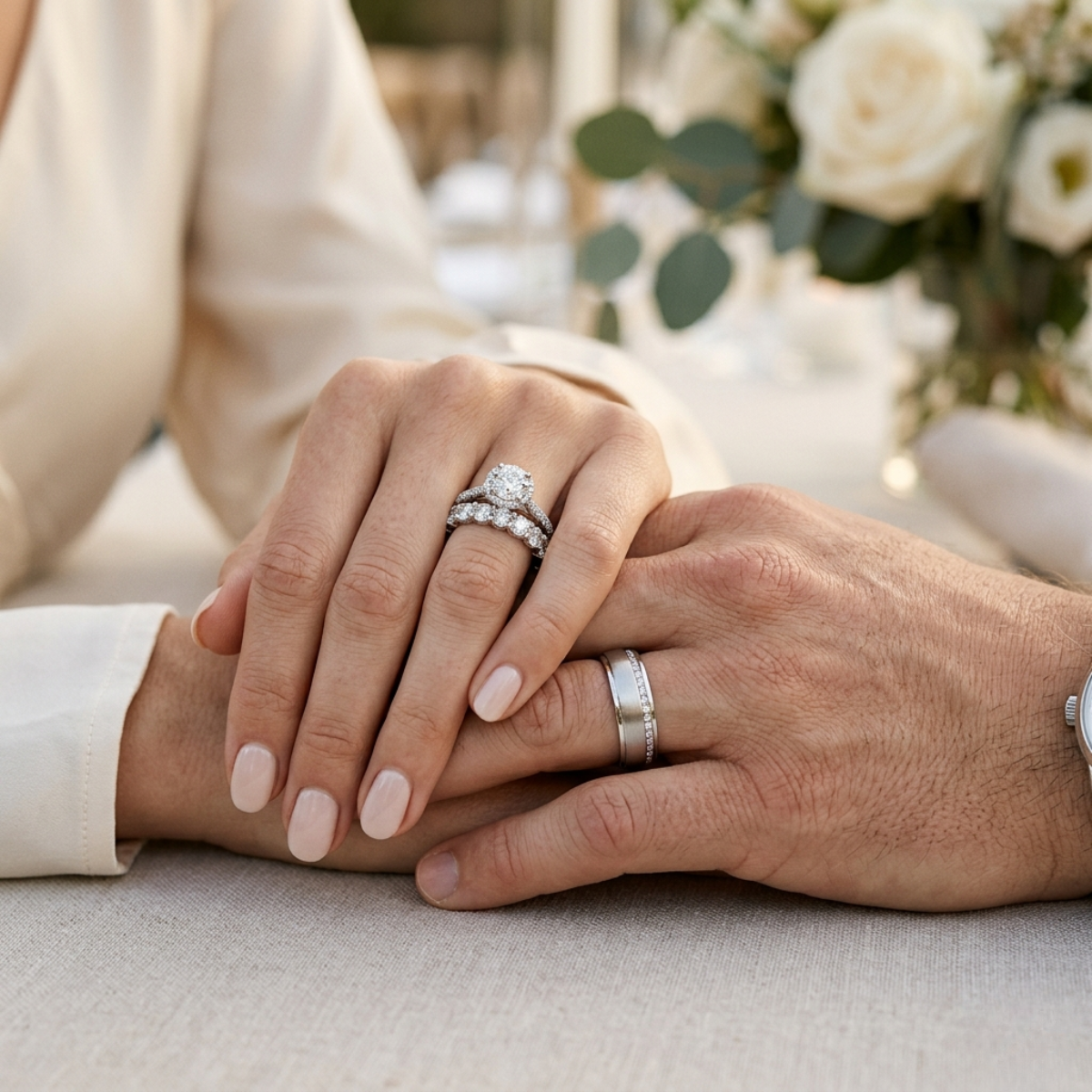
Most couples spend months deciding on the engagement ring and about twenty minutes thinking about the wedding band. It feels like a simpler purchase, until it isn't. Diamond wedding bands involve more decisions than people expect: the metal, the setting, the width, whether it needs to sit flush against an existing ring. In 2026, the options have only grown, and knowing what to look for before you start shopping makes the whole process a lot less stressful. This guide cuts through the noise and helps you figure out exactly what to look for.
How Do I Choose the Perfect Diamond Wedding Band?
Start with what your lifestyle is. A wedding band is not a piece you wear to special occasions, it is on your finger every single day, through every season and situation. That means comfort and durability need to sit alongside aesthetics, not behind them.
Width is the first practical decision. Narrower bands, around 2 to 3mm, tend to suit smaller hands and pair more easily with engagement rings. Wider bands, from 4mm upward, make more of a statement on their own and suit those who prefer a bolder look.
When it comes to setting style, each option has its own strengths:
● Pave setting: This setting contains small diamonds set closely together along the band for continuous sparkle. It seems beautiful, but the tiny prongs need occasional maintenance.
● Channel setting: In the Channel setting, diamonds sit flush within a groove in the metal. This is a cleaner profile, more protective, and better suited to an active lifestyle.
● Prong setting: This setting allows maximum light into each stone, but sits slightly higher and can catch on things over time.
Which Diamond Wedding Bands Are Trending in 2026?
A few styles have pulled ahead clearly this year.
● Eternity wedding bands, where diamonds run continuously around the full circumference of the ring remain one of the most popular choices, particularly for those who want something that looks equally striking from every angle. Half-eternity bands, where diamonds cover only the top half, are also best sellers and tend to be more comfortable for people who are not used to wearing rings.
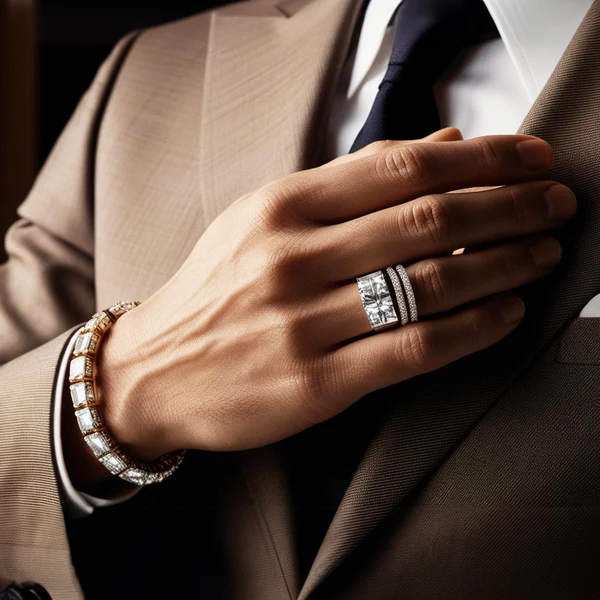
● Stacking has become genuinely mainstream. Couples are choosing diamond wedding rings that are designed to be worn alongside other bands. A slim white gold diamond band paired with a yellow gold engagement ring, for instance, has become a look many people are deliberately going for rather than avoiding.
● Custom Diamond Wedding Bands have also seen a significant uptick. More people are working with local jewellers to design something specific to them, incorporating a particular stone cut, an engraving, or a design detail that connects to their relationship. It takes a little more time and budget, but the result is a ring that genuinely cannot be found anywhere else.
● For couples shopping together, wedding bands for couples with complementary but not identical designs are trending strongly. Matching sets feel dated to many buyers in 2026; coordinated sets, where the rings share a detail or metal but differ in width or stone arrangement, feel far more current.
How Much Do Diamond Wedding Bands Cost?
The first thing worth knowing about diamond wedding rings is that the price range is wide, and that is actually a good thing. It means there is something at almost every budget. Expect to pay somewhere between A$1,500 and A$2,500 for a decent half-eternity white gold diamond band with natural stones, though that number moves depending on carat weight and which jeweller you go with. Full eternity wedding bands with higher-quality stones can range from A$3,500 to A$8,000 or more depending on total carat weight and diamond grade.
Custom diamond wedding bands will generally add A$500 to A$2,000 to the base cost, depending on the complexity of the design and the jeweller you work with. That premium is worth it for many couples- a custom piece eliminates the compromise of choosing from existing stock.
Lab grown diamonds, as with engagement rings, can bring the cost down by 50 to 60 per cent without any visible difference in the stone. For couples wanting to put more of their budget into the wedding itself, that is a meaningful saving.
Are Diamond Wedding Bands Good for Everyday Wear?
Diamond wedding bands are designed to be worn daily, but some settings hold up better than others under real-world conditions. Channel and bezel settings are the most practical for active hands. The diamonds are protected on the sides and less likely to chip or loosen from impact. Pavé settings are beautiful but require a little more care, the small prongs holding each stone can wear down over time, and an annual check with your jeweller is a smart habit.
Conclusion
There is no single perfect diamond wedding band, there is only the one that works for your style, your hand, your lifestyle, and your budget. Whether you are drawn to the timeless elegance of eternity wedding bands, the flexibility of a stackable white gold diamond band, or the individuality of custom diamond wedding bands, the options available to Australian buyers in 2026 make it genuinely possible to find something that feels exactly right.
Subscribe to our blog for more insights on wedding bands for couples.
FAQs on Diamond Wedding Bands
1. What should I consider when choosing a diamond wedding band in 2026?
Consider your personal style, diamond quality, metal type, budget, and how well the band pairs with your engagement ring. Comfort and everyday wearability are also important factors.
2. Which diamond wedding band styles are most popular in 2026?
Popular styles include eternity bands, pavé diamond bands, vintage-inspired designs, minimalist bands, and lab-grown diamond wedding bands that offer excellent value.
3. How do I match a diamond wedding band with my engagement ring?
Choose a band that complements the shape, metal, and setting of your engagement ring. Many couples opt for custom-fitted wedding bands for a seamless look.
4. Are lab-grown diamond wedding bands a good choice in 2026?
Yes. Lab-grown diamond wedding bands provide the same beauty and durability as natural diamonds while often being more affordable and environmentally conscious.

