




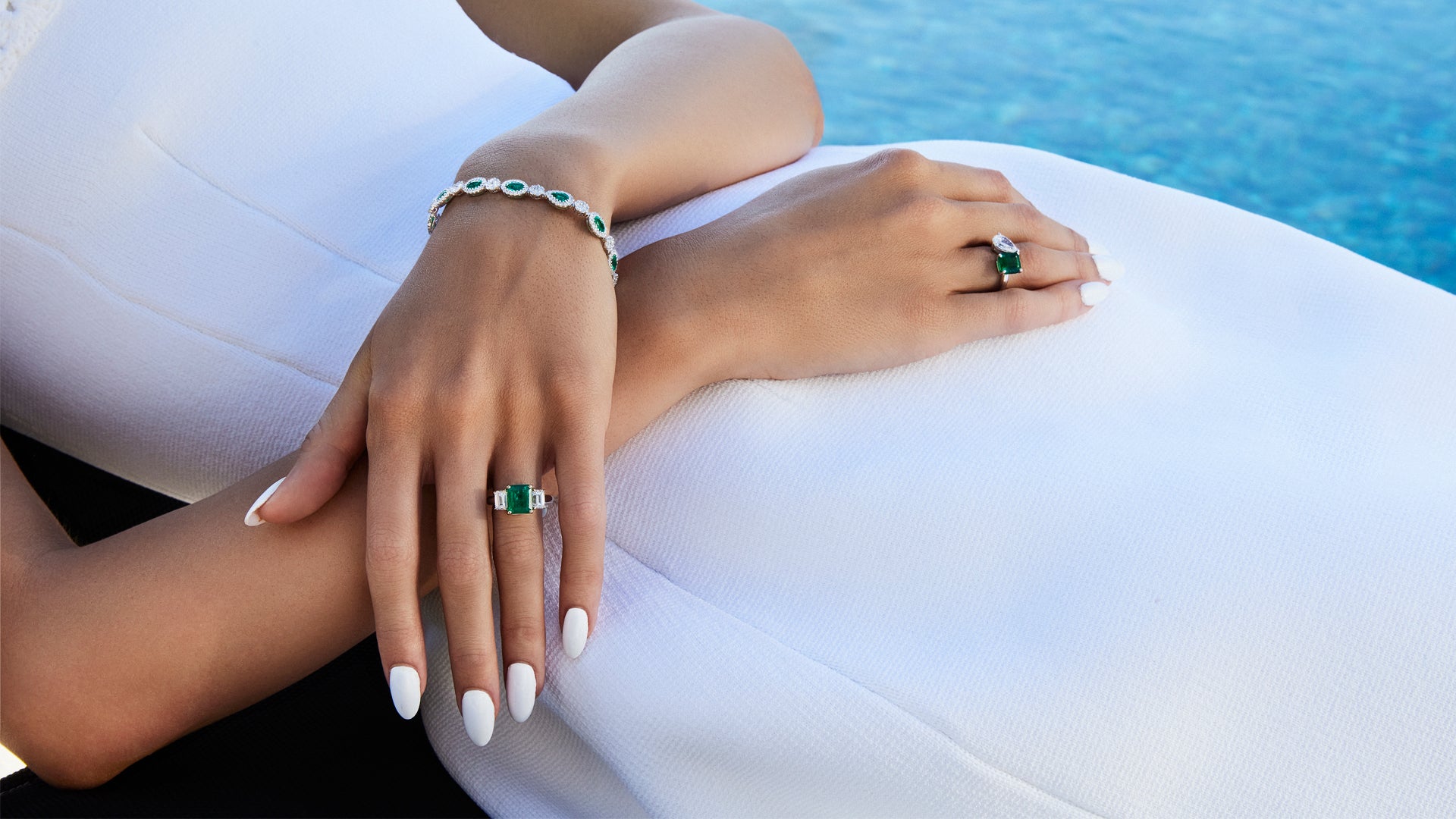
Bridal Guides
Bridal Guides are designed to help you navigate this special journey with expert advice and insights into the world of fine jewellery. From understanding the different cuts and shapes of diamonds to choosing the perfect setting.


A Guide to Diamond Clarity and the Diamond Clarity Chart
Diamond clarity refers to the presence of natural internal characteristics, known as inclusions, and external features, called blemishes, within a diamond. Formed deep within the earth over millions of years, every diamond develops unique characteristics during its natural creation process. Clarity is one of the internationally recognised 4Cs — cut, colour, clarity, and carat weight — used to assess a diamond’s overall beauty and value. At MIDAS Jewellery, we carefully select diamonds with exceptional clarity to ensure remarkable brilliance and timeless elegance.
At MIDAS Jewellery, we believe a beautifully cut diamond transforms exceptional craftsmanship into timeless brilliance.
What Is Diamond Clarity?
Diamond clarity measures the visibility, size, location, and number of inclusions and blemishes found within a diamond. These natural characteristics can influence how light travels through the stone and affect its brilliance and sparkle.
Most inclusions are microscopic and invisible to the naked eye. In many cases, a diamond can appear perfectly clear even though minor inclusions exist under magnification.
Understanding the Diamond Clarity Scale
The Gemological Institute of America (GIA) developed the internationally recognised diamond clarity grading scale. The scale includes 11 grades across six categories.
FL – Flawless
No inclusions or blemishes visible under 10x magnification. These diamonds are exceptionally rare.
IF – Internally Flawless
No internal inclusions visible under magnification, with only very minor surface blemishes.
VVS1 & VVS2 – Very Very Slightly Included
Minute inclusions that are extremely difficult for a skilled grader to detect under magnification.
VS1 & VS2 – Very Slightly Included
Minor inclusions visible under magnification but typically invisible to the naked eye.
SI1 & SI2 – Slightly Included
Noticeable inclusions under magnification, with some potentially visible without magnification.
I1, I2 & I3 – Included
More visible inclusions that may affect transparency, brilliance, and durability.
What Causes Diamond Inclusions?
Diamond inclusions occur naturally during the formation process deep beneath the earth’s surface. Tiny crystals, fractures, or growth patterns can become trapped inside the stone as it develops under intense heat and pressure.
These characteristics make every diamond unique and act as a natural fingerprint of the stone.
Factors That Influence Diamond Clarity
Several factors determine a diamond’s clarity grade:
Size
Larger inclusions generally have a greater impact on clarity.
Number
Diamonds with numerous inclusions may receive a lower clarity grade.
Position
Inclusions located near the centre or top of the diamond are typically more noticeable.
Nature
The type of inclusion — such as crystals, feathers, or clouds — can affect appearance differently.
Relief
The contrast between an inclusion and the diamond itself influences how visible the inclusion appears.
How Diamond Cut Affects Clarity Appearance
Different diamond shapes and cuts can influence how visible inclusions appear.
Brilliant-cut diamonds, such as round brilliant cuts, reflect light intensely and can help disguise small inclusions. Step-cut diamonds, including emerald and Asscher cuts, have larger open facets that may reveal inclusions more easily.
Because of this, clarity selection often depends on the diamond’s shape and overall design.
Eye-Clean Diamonds Explained
An “eye-clean” diamond refers to a stone whose inclusions are not visible to the naked eye during normal viewing.
Many VS and some SI clarity diamonds can appear completely clean without magnification while offering excellent value compared to higher clarity grades.
Choosing the Right Diamond Clarity
The ideal clarity grade depends on several factors, including:
- Diamond shape and cut
- Carat weight
- Setting style
- Personal preference
- Budget
For many customers, VS1 or VS2 clarity diamonds provide an ideal balance of beauty, brilliance, and value. Larger diamonds or step-cut shapes may benefit from higher clarity grades to maintain a cleaner appearance.
At MIDAS Jewellery, our experts carefully guide you through the selection process to help you choose a diamond that perfectly suits your style and priorities.
Why Diamond Clarity Matters
Diamond clarity contributes to the overall beauty, rarity, and value of a stone. While many inclusions are invisible without magnification, clarity still plays an important role in determining a diamond’s brilliance and appearance.
Understanding diamond clarity helps you confidently select a diamond that balances beauty, quality, and value for your engagement ring or fine jewellery piece.
Every diamond at MIDAS Jewellery is selected with exceptional attention to craftsmanship, elegance, and timeless beauty.
Frequently Asked Questions
Flawless (FL) diamonds are considered the highest clarity grade due to the absence of visible inclusions under magnification.
Most inclusions in higher clarity diamonds are microscopic and cannot be seen without magnification.
An eye-clean diamond has no visible inclusions when viewed normally without magnification.
Yes. Significant inclusions can interfere with light reflection and reduce brilliance.
VS1 and VS2 clarity grades are often considered excellent choices for balancing appearance and value.
The House of Midas

Engagement & Bridal
